Thursday, September 9, 2010

Raspberries with rose water syrup.


This is a beautifull looking dish with bright coloring of pink and red that goes wonderfully with white Vanilla lemon yogurt panna cotta.

Raspberries with rose water syrup.

2 cups water
1 cup caster sugar
2 teaspoons rose water
1 vanilla bean, split and seeds scraped.
500 g raspberries (fresh or frozen)

*Place the water, sugar, rosewater, and vanilla bean and seeds in a saucepan over high heat and bring to a boil. Reduce heat to low and simmer for 4 minutes.
*Remove from the heat and add the raspberries and set aside to cool.
*Serve with Vanilla and lemon yogurt panna cotta or with vanilla ice cream.

Spring Desserts.


I have been cooking very nice desserts lately. Cooking or baking makes me feel calm, in control and disperses any negative thoughts that may fly through my head. Plus I love it, getting all the ideas of how it is going to work, if there is anything I can substitute and how others and I will enjoy the final product by seeing and savouring it.

I had made this panna cotta recipe from Donna Hay a few times and decided to add more yogurt plus vanilla and the end result tastes wonderfull.

Vanilla and lemon yogurt panna cotta.

200 ml pouring cream
½ cup milk
½ cup icing sugar
2 teaspoons powdered gelatine
2 tablespoons water
1 teaspoon grated lemon rind
2 tablespoons lemon juice
1 teaspoon vanilla bean paste
1 cup plus 1 tablespoon thick natural yogurt


· Place cream and milk in a saucepan over low medium heat and simmer for 5 minutes.

· Combine gelatine and water and set aside for 5 minutes.
· Remove the cream mixture from the heat, add the icing sugar and stir until dissolved.
· Add the gelatin mixture, vanilla, lemon juice, lemon rind and stir until combined.
· Whisk in the yogurt
· Pour into a mould and refrigerate for 4 hours or until firm.

Sunday, August 22, 2010

Why return ? / Por que regresar?

                                                            Students hitch hiking.

Cuban scenary.


Sometimes Cubans wonder why exiles and Cubans who have immigrated to another country, do return to visit. The people whose biggest ambition was to leave Cuba as soon as possible and now wish to revisit as much as possible.

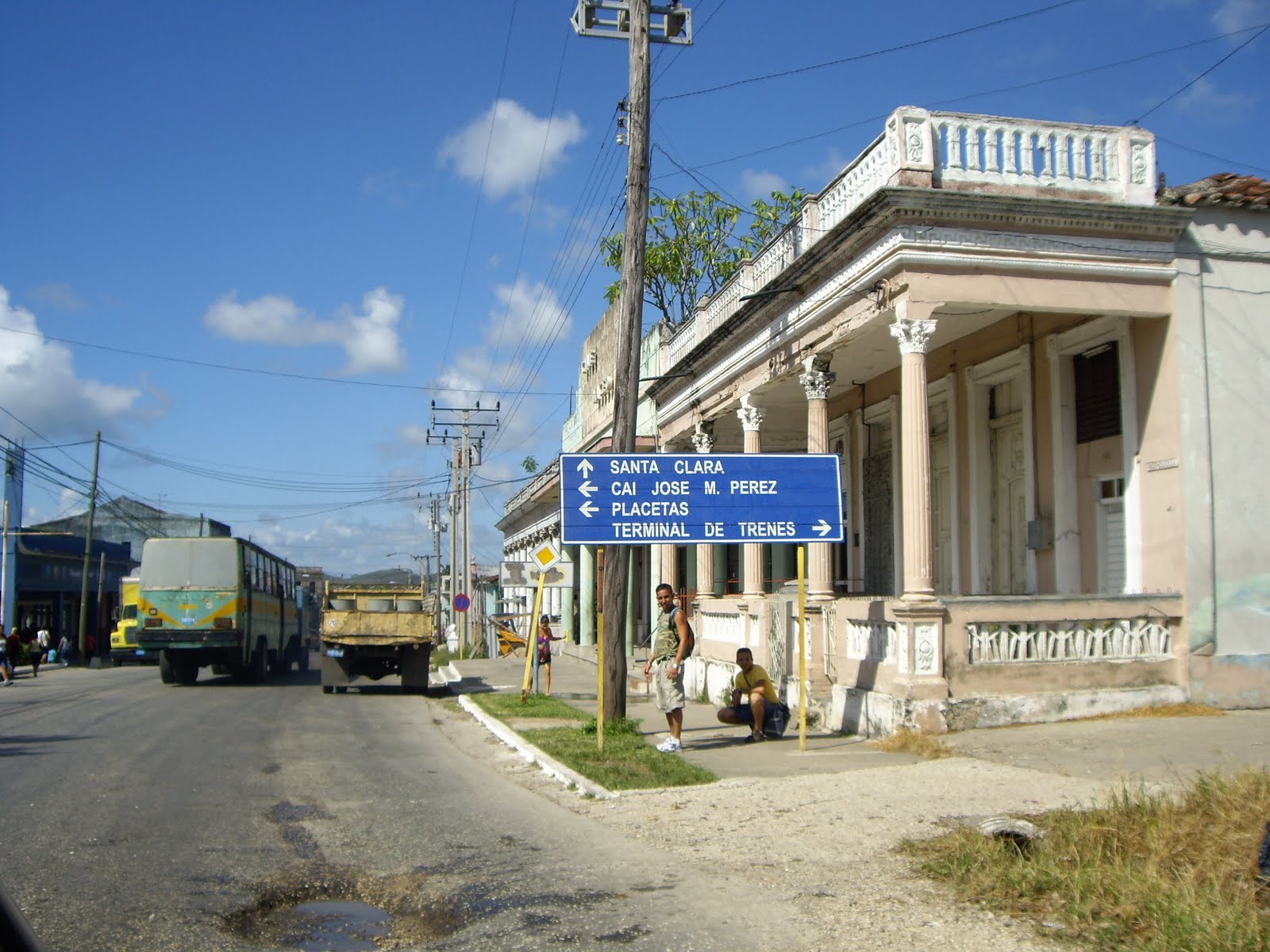
It is very different to revisit Cuba and travel in an air conditioning rent a car compared to trying to hitch hike in the boiling sun for hours on end, the Cuban way. Looking out the landscape from a comfortable air conditioning car you see the beauty of the countryside and it is sharp colors like a postcard, as you have never seen it before.

Local Cubans wonder if Cuba has something special. I guess you have to be an emigrated to know this. That only when you leave that land is that you start loving it a little. That for us the magic is that back there are the places that are especial for us in our minds, our first school, the language, the neighbors, our first teacher, the road where we learnt to ride our first bike.

It is like going through a photo album of our lives (especially in Cuba where not much change) it is the place where we did belong, it is our past and that is the reason why we love to comeback.

Sometimes we are too busy with our present and in not mood to go there but we arrive and we fall in love with that place again.

Friday, August 20, 2010

Pulses or grains. / Granos o legumbres.


We Cubans live on a diet predominately based on legumes, so it is not a surprise I often cook black beans. Introduced to Cuba by the Spaniards, grains are very nutritious, they are an excellent source of iron, potassium, vitamin B6 and folic acid.

I was surprised to find they are one of the cheapest foods here in Australia.
Pulses and Grains were known as the food for the poor but nowadays everybody recognizes their value as a healthy meal and more westerners are moving away from a predominantly meat form of diet.

I prefer to buy canned cannellini beans, lentils, and chickpeas as in their dry form they may require to be soaked previously and I like cooking to be easy.
Lately I have developed my own recipe to get the best out of what the can provides, my favorite is lentils soup.


Lentils soup


(Same recipe for cannellini beans)

½ Spanish chorizo cut in coin size
2 shallots or 2 green onions (or 1 brown onion)
1 garlic clove minced
½ teaspoon of cumin

1 tomato
1 bay leave
1 tablespoon red wine vinegar
thyme
1 can of lentils
1cup chicken stock

Put the chorizo in a hot saucepan and cook for a few minutes until you get their orange oil; put the chorizo away on a plate until later.
Use this oil to cook the shallots and garlic for 3 minutes.
Add cumin and stir for 1 minute.

And then add the lentils (without rinsing) stock, chorizo, red wine vinegar, tomato, bay leave, thyme; let it boil and simmer gently for 10 minutes or so.
You can serve this soup with a lime wedge.

Saturday, August 14, 2010

Train journey. / Viaje en tren.


Recently my husband and I caught a train to visit the Brisbane EKKA (exhibition). It was nice to sit in cushion seats in air conditioning. The train traveled fast.

Once in a small town in Cuba my husband asked his friend what was wrong with getting the train? So my husbands friend laughed on his way up to the nearest train to show him what a Cuban train looks like inside.

For a Cuban to imagine my Australian husband hopping on a Cuban train is hilarious. I imagine him sweating heavily walking elbow to elbow amongst Cubans carrying sacks of rice, beans or fish on their backs.

Actually, if you compare traveling by train, they are not as terrible as buses, their disadvantage is that they are too slow, like doing a 50 km journey can take 3 hours. But you can have your seat and do not have to argue with anybody for it, the seat would be very hard anyway.

In this sort of trip you can see the real Cuba, a Cuba that is not glamorous at all. People will be selling goods and if you forget about the hard seat and the slow trip you can have fun watching and listening to the Cubans selling things like sweet cookies or roast peanut. People in the train, unless they are students, look pretty poor but are friendly.

I experienced the train one summer from Havana to Sancti Spiritus and it was almost unbelievable that I survived the heat; generally a Cuban train does not have air conditioning. Warning: Do not dare to go to the toilet.

On my trips to school or to Havana in 2001 I was never lucky enough to see any fast trains in Cuba .I thought it was a myth, everybody mentions it but nobody has seen one.

One night the train to Havana was cancelled and a friend and I slept in the train station holding our luggage as we could between our legs so nobody would rob us of our most precious possessions. Any possession for a Cuban is precious. As a student our worst nightmare was to be robbed.

Some days we were lucky we could buy a ticket paying around 3 dollars to the inspectors, but that night there was no train running so we could not travel either with the extra cash.

In 1837 Cuba was one of the first countries to have railway in Latin America and the Iberian world.

Monday, July 26, 2010

Custard-apple / chirimoya o anon.


Custard-apple fruit ( chirimoya)

This month is custard-apple season in Australia, as I see the fruit in every market. I was pleasantly surprised the first time I saw it here. Some locals do not know the fruit.

It is a fruit that brings to me memories of children in Cuba throwing stones at the tree in order to get the fruit down or asking the adults if it is ripe and counting days for it to be ripened. Most of the time we could not wait that long, the same story happens with mangos.

I like the custard-apple to give its gentle flavour to a milkshake. You must take the ebony seeds out before mixing its pulp with a cup of full cream milk, a tablespoon of condensed milk and some ice in the fruit blender; the result is a pale, creamy drink with a flavour that reminds me of vanilla and makes the effort of taking the seeds out rewarding.

Mango.


I do not know if every Cuban shares my enthusiasm for mangos but I know my brother does. To me this is the top fruit pick and I really miss them when the ripening season is too far away to wait. I also dream of making quick trips to Singapore or Hong Kong to catch up with their mango seasons there.

In Cuba it seems like we cannot wait either because children start eating them unripe. I was surprised it is completely normal to find unripe mangos in Asian dishes as a salad ingredient.

Recently I was so happy to get a box of Kensington Pride frozen mango cheeks. I feel so smart; imagine having tasty mangos when they are out of season.

I wondered why Australia offers other fruits like avocado, strawberries or pineapples year round but not my heavenly Kensington Pride mangoes. But anyway I smile thinking that if I did have them so often I would not put them on top of my list. I patiently wait for the season to start when summer arrives in the north.

This week I am over the moon with my box of frozen mangos, ah like a child with a box full of candy. Of course I have to do something special with it, I found in a book a recipe I want to try, called mango fool, it should go well with blueberries.

2 mangos or equivalent (5cheeks)
200 ml pouring cream
½ cup sugar or less

1. You must thaw the mangos and then put them in a food processor with the steel blade and puree them.
2. Mix mango and sugar and put away until needed again.
3. Whip your pouring cream.
4. Fold the cream into the mango and pour in mould to refrigerate. Cover for 2 hours.


A simpler version is to fold the mango puree in natural yogurt, something you can serve at breakfast straight away.

You can try also to make a delicious milkshake. Just after you have puree the mango in the food processor, put it in the blender with a cup of milk, a tablespoon of condensed milk and some ice cubes.

Roast suckling pig / lechon asado.


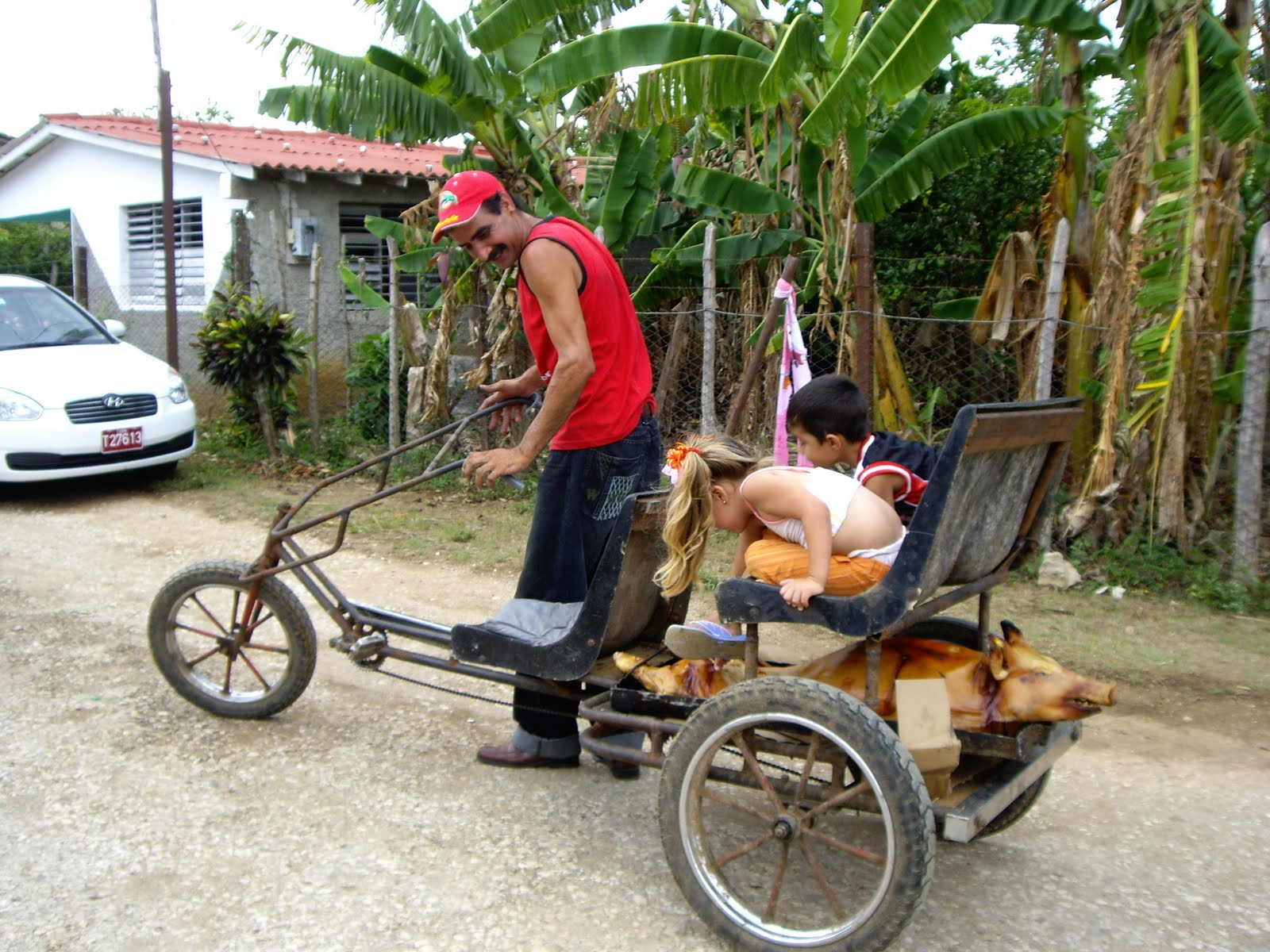
On very special occasions Cubans like to celebrate with a roast suckling pig cooking slowly in their backyards. The look of it screams “f i e s t a” party.

My mother’s father cooks the best roast suckling pig I ever tasted; he is a master at this. I tried to repeat the experience in Miami Florida as that city is like Cuba in America, but it did not happen to be that good, their pork tastes totally different, like a different animal, probably because the pigs diet is unlike what they eat in Cuba.

This is a Total Cuban experience; the roast suckling pig being delivered on the “bicitaxi”.
This time the pig was cooked to perfection at the local bakery. There were fears of rain and that would ruin the backyard cooking.